Lumbar Injection Satisfaction — Data-Driven Analysis
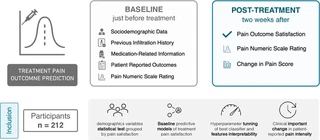
Data-driven project that retrospectively identifies which chronic low-back-pain (CLBP) patients benefit from lumbar steroid injections, using the clinical, demographic and patient-reported data of the TREXI study. The aim is to find key predictors of treatment satisfaction and to establish clinically meaningful pain-reduction thresholds.
Study design
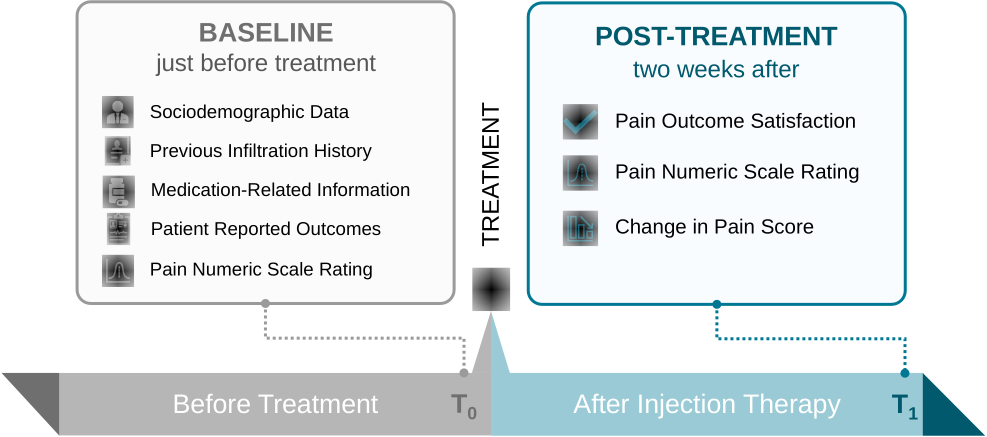
212 participants completed questionnaires directly before (T0) and two weeks after (T1) the injection, covering pain intensity, patient-reported outcomes (COMI, PSEQ), and demographic and clinical variables.
Methodology
Missing values were imputed with Random Forest (numeric) and K-Nearest-Neighbours (categorical); features were standardised or encoded by type. Nested cross-validation trained Random Forest, Logistic Regression and Gradient Boosting classifiers, with the best model optimised through Bayesian hyperparameter tuning. SHAP values interpreted the predictions and ROC analysis derived the pain-reduction thresholds.

Key results
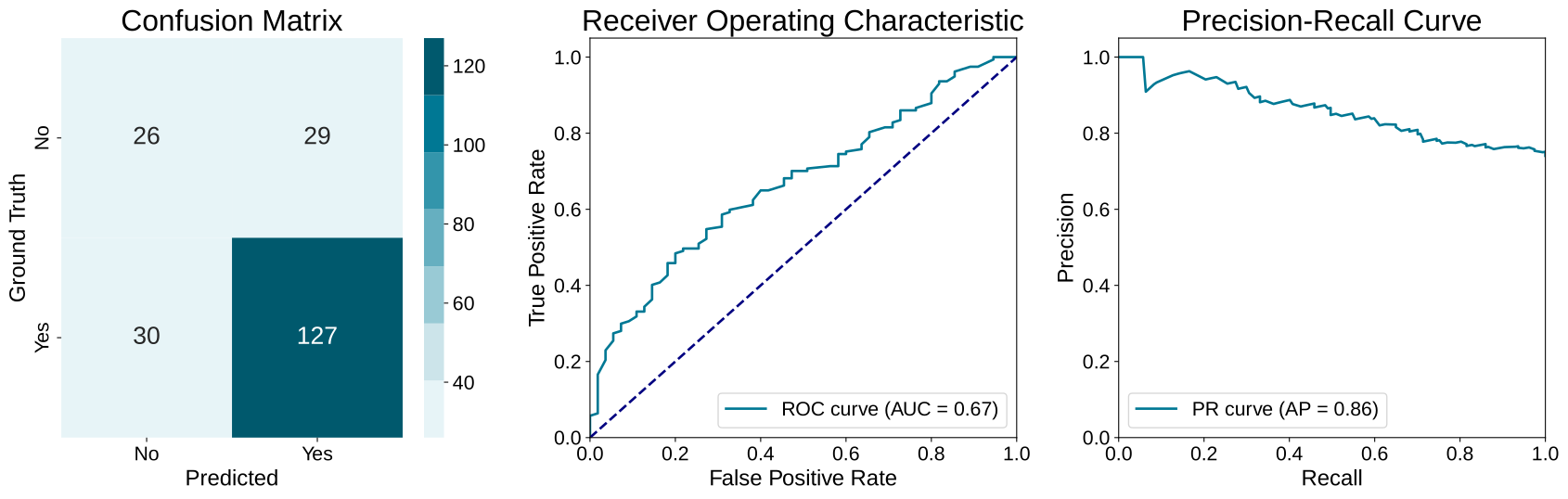
A Random Forest model reached 0.865 average precision in predicting treatment satisfaction. SHAP analysis identified pain self-efficacy — coping mechanisms and maintained daily-activity performance — as the strongest predictors. A 2.03-point absolute (or 30 % relative) drop on the pain scale was found to be clinically meaningful.
Published in Scientific Reports (Nature), 2025. Supported by the PHRT Strategic Focus Area of the ETH Domain.
